
If you're moving beyond the beginner stage and looking for a snowboard with more performance than a beginner board or rental board, the right next step should still feel manageable while you're developing your technique and confidence.
Our top rated intermediate snowboards for 2026-2027 combine approachable handling with enough performance to support progression toward advanced riding. They're particularly suited to high-end beginners and early intermediates, with options for exploring freestyle, all-mountain and mellow freeride riding.
You don't need to know exactly where your snowboarding is heading yet. Use the comparison table, board summaries and buying guide below to find a combination of flex, feel and riding direction that suits you now and gives you room to develop.
What Is an Intermediate Snowboard?
At Snowboarding Profiles, our intermediate category is designed primarily for riders moving beyond the beginner stage - high-end beginners and early intermediates who are developing more consistent technique and confidence.
It's a bridge between an ability category and a performance category. The boards need to remain approachable and easy to ride, but also provide enough performance to support progression toward advanced riding.
This could be your first board, if you've been using rentals for a while and have reached a high enough level to skip a beginner board - or you may be getting this as a next step up from a beginner board.
How Do We Assess the Boards?
Unlike beginner boards, every board in this category is also assessed within a performance category, such as all-mountain, all-mountain-freestyle or mellow freeride. Its score in that category contributes half of its intermediate score. Turning ease and versatility also contribute, helping us identify boards that combine easy handling with room to develop.
We don't apply an additional normalization to the final intermediate score. The performance-category score used in the calculation has already been normalized (if you want to see why we normalize performance category scores, check out the FAQs in the top rated lists for the performance categories - e.g. Top Rated All-Mountain Snowboards).
What Feel is Considered?
We consider boards ranging from loose to stable in feel, but exclude semi-locked-in and locked-in options. Those require more technical precision and commitment than we consider necessary for riders still establishing their technique (and believe that it can be a barrier to focusing on tweaking your technique if you have to fight the board just to manage it).
Compared with our beginner category, we're more accepting of a loose feel. Riders at this stage generally have better control and may enjoy the easier pivoting and freedom that a looser board provides.
Progression Considerations
An intermediate board doesn't necessarily need replacing when you become advanced. Depending on your preferred riding style, it could remain suitable for years.
However, if you're already a solid intermediate or above, your riding preferences should usually lead the decision. Our performance categories will generally be a more useful starting point than choosing primarily by intermediate suitability.
Typical Intermediate Snowboard Characteristics
Flex: Typically Mid-Soft to Medium | most commonly 4/10 to 5/10.
Camber Profile: Typically Hybrid Camber or Hybrid Rocker.
Shape: Varied but typically True Twin or Directional Twin
Setback: Varied but typically between centered and 20mm
For a broader explanation of the different riding categories, see the snowboarding styles section of our complete snowboard buying guide.
Quick Comparison Table
Note: Boards receiving the same score share the same ranking. Within tied groups, the board with the lower MSRP is placed higher.
RANK | BOARD | SCORE | FLEX | FEEL | Performance category | performance category score |
|---|---|---|---|---|---|---|
#10= | 84.7 | 5.5/10 | Stable | All-Mountain | 87.3/100 | |
#10= | 84.7 | 4.5/10 | Loose | All-Mountain-Freestyle | 83.3/100 | |
#9 | 85.3 | 5.5/10 | Stable bordering semi-loose | All-Mountain | 88.6/100 | |
#8 | 85.8 | 4.5/10 | Stable bordering semi-loose | All-Mountain-Freestyle | 85.6 | |
#7 | 86.4 | 4.5/10 | Stable bordering semi-loose | All-Mountain-Freestyle | 86.7/100 | |
#6 | 87.2 | 5/10 | Stable bordering semi-loose | Mellow Freeride | 84.4/100 | |
#4= | 89.7 | 5/10 | Semi-loose | All-Mountain | 87.3/100 | |
#4= | 89.7 | 5/10 | Stable | Mellow Freeride | 89.4/100 | |
#3 | 90.1 | 5/10 | Semi-loose | All-Mountain | 86.1/100 | |
#2 | 90.7 | 5/10 | Stable bordering semi-loose | All-Mountain | 87.3/100 | |
#1 | 91.3 | 5/10 | Stable | All-Mountain | 88.6/100 |
OUR TOP 10 INTERMEDIATE SNOWBOARDS RANKED
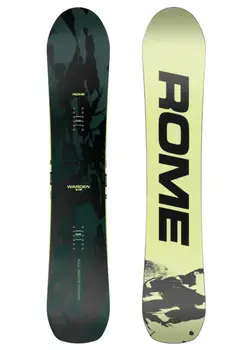
#10=: Rome Warden
FLEX
FEEL
TURNING EASE
OVERALL rating: 84.7/100
#10=: Rome Warden
Joining this year's list in a shared #10 position, the Rome Warden offers a predictable all-mountain platform for developing riders.
Its stable feel is particularly appealing if you want a board that responds consistently without feeling loose underfoot. At 5.5/10, it's also one of the slightly firmer options here, making it worth considering for stronger or heavier riders seeking a little extra support.
The Warden requires slightly more turning input than some of the other boards in this list, but is still very approachable. A good option if reliability, predictability and general all-mountain progression matter most.
Current Availability/Buying Options
Prices and availability can change. Please confirm size and stock with the retailer.US $469.95 US $392.69 US $469.95 US $446.45 US $469.95 US $281.97 US $469.95 US $281.97 US $469.95 US $328.96
Score Breakdown for the Warden
| FACTOR | Rating (/5) | Weighted |
|---|---|---|
| Flex Score | 4 | 16/20 |
| Turning Ease | 4 | 16/20 |
| Versatility | 4.5 | 9/10 |
| Category Score | 87.3 | 43.65/50 |
| TOTAL (after normalizing): | 84.7/100 |
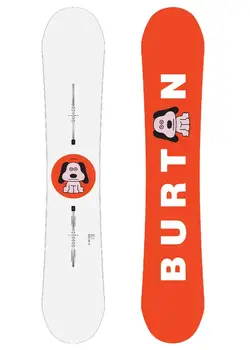
#10=: Burton Process Flying V
FLEX
TURNING EASE
OVERALL rating: 84.7/100
#10=: Burton Process Flying V
The Burton Process Flying V returns at #10, sharing the spot with the Warden.
It's the loosest-feeling board in this year's list, making it particularly interesting if you enjoy easy pivoting and slashing. Its 4.5/10 flex also places it among the softer options, helping keep physical input manageable.
That loose sensation won't suit everyone. Riders who prefer a more stable feel underfoot may get along better with one of the stable-feeling alternatives.
But if that freedom appeals, the Process Flying V offers an accessible all-mountain-freestyle route for developing your riding and exploring a more playful approach.
Current Availability/Buying Options
Prices and availability can change. Please confirm size and stock with the retailer.US $549.95 US $384.97 US $549.95 US $384.97 US $549.95 US $384.97 US $549.95 US $439.96 US $549.95 US $384.95
Score Breakdown for the Process Flying V
| FACTOR | Rating (/5) | Weighted |
|---|---|---|
| Flex Score | 4.5 | 18/20 |
| Turning Ease | 4.5 | 18/20 |
| Versatility | 3.5 | 7/10 |
| Category Score | 83.3 | 41.65/50 |
| TOTAL (after normalizing): | 84.7/100 |
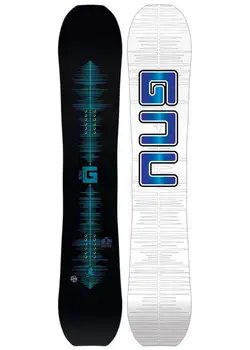
#9: GNU Upgrade
FLEX
FEEL
TURNING EASE
OVERALL rating: 85.3/100
#9: GNU Upgrade
The GNU Upgrade joins this year's list at #9, combining approachable handling with strong performance in our all-mountain category.
Its 5.5/10 flex provides a little more support than most options here, while its stable feel borders on semi-loose. That gives you some freedom to pivot and release the tail without moving particularly far toward loose.
It's worth considering if you're interested in maneuverability, butters and working jumps or spins into your riding.
The Upgrade takes a little more turning input than the easiest options here, but offers a useful balance for riders who want progression-friendly handling with room to develop.
Current Availability/Buying Options
Prices and availability can change. Please confirm size and stock with the retailer.US $599.99 US $419.99 US $599.99 US $359.99 US $599.99 US $359.99 US $599.99 US $449.99
Score Breakdown for the Upgrade
| FACTOR | Rating (/5) | Weighted |
|---|---|---|
| Flex Score | 4 | 16/20 |
| Turning Ease | 4 | 16/20 |
| Versatility | 4.5 | 9/10 |
| Category Score | 88.6 | 44.3/50 |
| TOTAL (after normalizing): | 85.3/100 |
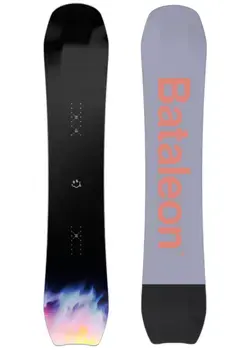
#8: Bataleon Whatever
FLEX
FEEL
TURNING EASE
OVERALL rating: 85.8/100
#8: Bataleon Whatever
Entering this year's list at #8, the Bataleon Whatever provides a softer, more playful option for riders drawn toward all-mountain-freestyle.
Its 4.5/10 flex makes it relatively easy to manipulate, while its stable feel borders on semi-loose. Combined with particularly accessible turning, that makes it an appealing next step if you're moving beyond the beginner level but still value an easygoing ride.
Maneuverability and butters are particular attractions, so it's worth considering if you want to start getting more creative around the mountain.
You don't need to head straight into the park, though. The Whatever gives you an approachable platform for developing the basics further while exploring those possibilities.
Current Availability/Buying Options
Prices and availability can change. Please confirm size and stock with the retailer.US $549.95 US $329.97 US $579.95 US $404.95 US $579.95 US $550.95 US $579.95 US $347.97 US $499.95 US $349.97 US $549.95 US $384.97 US $579.95 US $347.97 US $579.95 US $347.97
Score Breakdown for the Whatever
| FACTOR | Rating (/5) | Weighted |
|---|---|---|
| Flex Score | 4.5 | 18/20 |
| Turning Ease | 4.5 | 18/20 |
| Versatility | 3.5 | 7/10 |
| Category Score | 85.6 | 42.8/50 |
| TOTAL (after normalizing): | 85.8/100 |
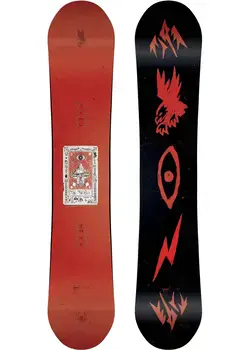
#7: Jones Tweaker 2.0
FLEX
TURNING EASE
OVERALL rating: 86.4/100
#7: Jones Tweaker 2.0
The Jones Tweaker 2.0 joins the intermediate list at #7, offering another accessible route into all-mountain-freestyle riding.
Its 4.5/10 flex keeps it relatively easy to bend and manipulate, while its stable-to-semi-loose feel provides a balance between predictability and freedom.
Particularly worth considering if switch, jumps and spins are becoming part of your arsenal, with its easy maneuverability helping you work those elements into your riding.
Importantly, this is the regular Tweaker 2.0, rather than the firmer Pro version. Its combination of easy turning and a softer flex makes it the more approachable starting point for this stage of progression.
Current Availability/Buying Options
Prices and availability can change. Please confirm size and stock with the retailer.US $499.95 US $349.97 US $529.95 US $370.97
Score Breakdown for the Tweaker 2.0
| FACTOR | Rating (/5) | Weighted |
|---|---|---|
| Flex Score | 4.5 | 18/20 |
| Turning Ease | 4.5 | 18/20 |
| Versatility | 3.5 | 7/10 |
| Category Score | 86.7 | 43.35/50 |
| TOTAL (after normalizing): | 86.4/100 |
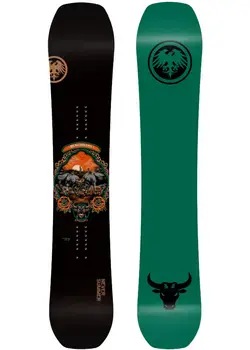
#6: Never Summer Benchmark
FLEX
FEEL
TURNING EASE
OVERALL rating: 87.2/100
#6: Never Summer Benchmark
Moving up from #7 to #6, the Never Summer Benchmark provides one of the two mellow freeride options in this year's list.
A good bet if your interests are moving toward directional riding, powder and exploring beyond the groomers.
Its 5/10 flex sits right in the middle of this list and it has a stable feel that borders on semi-loose. That gives you easy tail release along with its easy turning ability.
A useful starting point if you want to develop your freeriding without jumping straight to a stiff, technically demanding board.
Current Availability/Buying Options
Prices and availability can change. Please confirm size and stock with the retailer.Where to buy
US $599.99 US $479.99
Score Breakdown for the Benchmark
| FACTOR | Rating (/5) | Weighted |
|---|---|---|
| Flex Score | 5 | 20/20 |
| Turning Ease | 4.5 | 18/20 |
| Versatility | 3.5 | 7/10 |
| Category Score | 84.4 | 42.2/50 |
| TOTAL (after normalizing): | 87.2/100 |
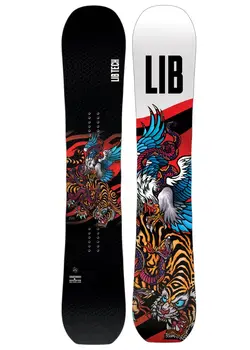
#4=: Lib Tech Terrain Wrecker
FLEX
FEEL
TURNING EASE
OVERALL rating: 89.7/100
#4=: Lib Tech Terrain Wrecker
The Lib Tech Terrain Wrecker moves from #5 into a shared #4 position this year.
Its all-mountain versatility is a particular attraction if you're still discovering your preferences and want one board to explore different directions of riding. It also leaves room for more experienced riding without requiring you to choose a stiff or demanding setup now.
The 5/10 flex provides a nice middle ground, while its semi-loose feel favors easy tail release and quick, easy adjustments.
Current Availability/Buying Options
Prices and availability can change. Please confirm size and stock with the retailer.US $599.99 US $419.99 US $599.99 US $359.99 US $599.99 US $389.99 US $599.99 US $419.99 US $599.99 US $419.99
Score Breakdown for the Terrain Wrecker
| FACTOR | Rating (/5) | Weighted |
|---|---|---|
| Flex Score | 5 | 20/20 |
| Turning Ease | 4 | 16/20 |
| Versatility | 5 | 10/10 |
| Category Score | 87.3 | 43.65/50 |
| TOTAL (after normalizing): | 89.7/100 |
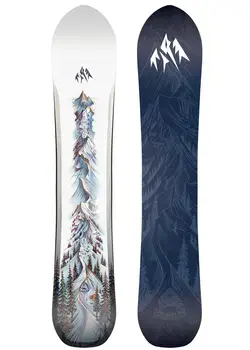
#4=: Jones Frontier 2.0
FLEX
FEEL
TURNING EASE
OVERALL rating: 89.7/100
#4=: Jones Frontier 2.0
The Jones Frontier 2.0 shares the #4 with the Terrain Wrecker.
As a mellow freeride board, it particularly suits riders who want to start exploring more directional riding and off-groomer terrain. Its stable feel provides a neutral platform, while its accessible turning helps keep that next step manageable.
At 5/10, it offers support while still being flexible enough that it's still easy to manipulate and doesn't make you work too hard.
It's also a useful contrast to the Benchmark: both provide a mellow freeride route with easy turning, but the Frontier has the more neutral, stable feel. A strong option if predictability matters as much as expanding where you ride.
Current Availability/Buying Options
Prices and availability can change. Please confirm size and stock with the retailer.US $529.95 US $423.96 US $529.95 US $370.97
Score Breakdown for the Frontier 2.0
| FACTOR | Rating (/5) | Weighted |
|---|---|---|
| Flex Score | 5 | 20/20 |
| Turning Ease | 4.5 | 18/20 |
| Versatility | 3.5 | 7/10 |
| Category Score | 89.4 | 44.7/50 |
| TOTAL (after normalizing): | 89.7/100 |
#3: Lib Tech dPr
FLEX
FEEL
TURNING EASE
OVERALL rating: 90.1/100
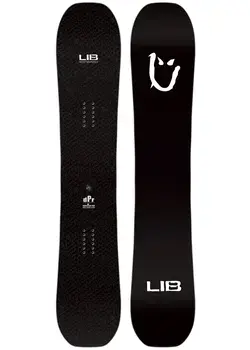
#3: Lib Tech dPr
Holding onto the #3 position, the Lib Tech dPr combines an easy riding experience with a semi-loose feel.
It's particularly interesting if you enjoy easy pivoting and want a board that encourages you to explore different ways of riding, with its all-mountain versatility. Its 5/10 flex sits in the middle of this list, while its turning ease is among the stronger ratings here.
The semi-loose sensation may take some adjustment if you're used to a more settled board. But if that freedom appeals, the dPr provides a progression-friendly option for developing an all-round approach without committing to a stiff, aggressive ride.
Current Availability/Buying Options
Prices and availability can change. Please confirm size and stock with the retailer.US $499.95 US $449.96
Score Breakdown for the dPr
| FACTOR | Rating (/5) | Weighted |
|---|---|---|
| Flex Score | 5 | 20/20 |
| Turning Ease | 4.5 | 18/20 |
| Versatility | 4.5 | 9/10 |
| Category Score | 86.1 | 43.05/50 |
| TOTAL (after normalizing): | 90.1/100 |
#2: Never Summer Trooper
FLEX
FEEL
TURNING EASE
OVERALL rating: 90.7/100
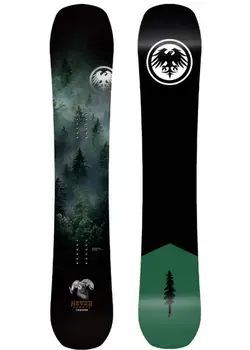
#2: Never Summer Trooper
The Never Summer Trooper retains the runner-up #2 spot, bringing together easy turning, a manageable 5/10 flex and a versatile all-mountain approach.
Its stable feel borders on semi-loose, making it worth considering if you want freedom to adjust and release the tail without going as loose as the dPr or Terrain Wrecker.
It's also an appealing option if jumps, spins, butters and maneuverability are becoming part of how you enjoy the mountain.
A strong next step for riders who want more performance while keeping an approachable feel, with versatility to help you discover your preferences.
Current Availability/Buying Options
Prices and availability can change. Please confirm size and stock with the retailer.US $639.99 US $511.99
Score Breakdown for the Trooper
| FACTOR | Rating (/5) | Weighted |
|---|---|---|
| Flex Score | 5 | 20/20 |
| Turning Ease | 4.5 | 18/20 |
| Versatility | 4.5 | 9/10 |
| Category Score | 87.3 | 43.65/50 |
| TOTAL (after normalizing): | 90.7/100 |
#1: Bataleon Goliath
FLEX
FEEL
TURNING EASE
OVERALL rating: 91.3/100
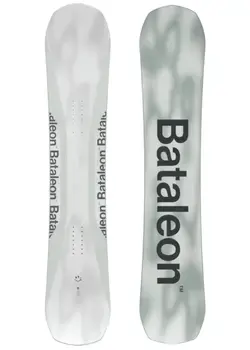
#1: Bataleon Goliath
Retaining the #1 position for 2026-2027 and for a few years running now, the Bataleon Goliath again provides our strongest overall balance of intermediate suitability and performance potential.
Its 5/10 flex offers support without being too demanding, while its stable feel and easy turning help keep it predictable and easy to manage.
It also provides a versatile all-mountain platform, with a freestyle leaning approach. That gives you room to develop your riding without needing to settle on one specific riding style right away.
This is the regular Goliath, rather than the firmer Goliath+. It's the more approachable option for progressing riders looking for performance they can make use of now.
Current Availability/Buying Options
Prices and availability can change. Please confirm size and stock with the retailer.US $629.95 US $439.95 US $599.95 US $419.97 US $629.95 US $440.97 US $629.95 US $377.97
Score Breakdown for the Goliath
| FACTOR | Rating (/5) | Weighted |
|---|---|---|
| Flex Score | 5 | 20/20 |
| Turning Ease | 4.5 | 18/20 |
| Versatility | 4.5 | 9/10 |
| Category Score | 88.6 | 44.3/50 |
| TOTAL (after normalizing): | 91.3/100 |
Intermediate Snowboard Buying Guide: How to Choose the Right Board for You
Every board in this list combines easy turning with enough performance to support your progression beyond the beginner level. But differences in feel, flex and riding style mean the highest-ranked board won't necessarily be the best choice for everyone.
This list is best for high-end beginners and early intermediates who want more performance without making their next board unnecessarily demanding.
Make Sure This Is the Right Starting Point
If you're starting to link turns more consistently, developing better edge control and becoming more confident on familiar terrain, this category can help you find a manageable next step.
You don't need to have perfected every part of your technique. These boards are selected with developing riders in mind, rather than assuming you already have advanced control.
However, if you're still struggling with the fundamentals, a board from our beginner list may make learning easier. And if your current beginner board still supports your progression, reaching intermediate level doesn't automatically mean you need to replace it.
If you've reached this level through renting or borrowing gear, then this is a good place to look for your first board - and getting your own board should go a long way in helping you to progress, by giving you that consistency every time you ride.
If you're already a solid intermediate with clear riding preferences, look primarily at our performance categories instead. At that point, how you want to ride becomes more useful than the intermediate label alone.
How Stable or Loose Do You Want the Board to Feel?
A stable-feeling board provides a more neutral, predictable platform. You can engage an edge and hold a turn, but still release the tail more easily than with a locked-in board.
A looser board makes pivoting, slashing and small adjustments easier. That freedom can be enjoyable, but may feel less settled if you're still developing confidence.
The Rome Warden, Jones Frontier 2.0 and Bataleon Goliath have the most neutral, stable feels here. These are good starting points if predictability is a high priority.
The GNU Upgrade, Bataleon Whatever, Jones Tweaker 2.0, Never Summer Benchmark and Never Summer Trooper sit between stable and semi-loose. They provide some extra freedom to adjust and release the tail without going particularly far toward loose.
The Lib Tech Terrain Wrecker and Lib Tech dPr have semi-loose feels. Consider these if you enjoy easier pivoting and a freer sensation underfoot.
The Burton Process Flying V is the loosest option. I'd mostly consider this if you already know you enjoy that sensation, rather than assuming the loosest board will automatically be the easiest for you.
None of these boards are semi-locked-in or locked-in. Those feels are excluded from this category because they demand more precision and a more solid technique than we consider necessary at this stage.
Also, stable describes the board's feel here. It doesn't automatically mean better stability at high speeds.
Keep Turning Ease a Priority
You can handle a little more technical difficulty as your control improves, but easy turning still matters. A board that responds without excessive effort lets you focus on refining your technique and building consistency.
The Process Flying V, Whatever, Tweaker 2.0, Benchmark, Frontier 2.0, dPr, Trooper and Goliath form the higher-rated group for turning ease in this list.
The Warden, Upgrade and Terrain Wrecker require a little more input, but are still easy too turn on.
That difference is worth considering alongside feel. For example, the Goliath combines particularly easy turning with a stable platform, while the dPr offers similarly accessible turning with a semi-loose sensation.
A loose feel and easy turning often go together, but they aren't the same thing. You don't have to choose a loose board to get easy edge changes.
Match the Flex to Your Physicality
The flex range here is relatively narrow, from 4.5/10 to 5.5/10. However, even those differences can affect how easily you bend and control a board.
The Burton Process Flying V, Bataleon Whatever and Jones Tweaker 2.0 are the softest options at 4.5/10. These are worth prioritizing if you're lighter, less physically powerful or simply prefer easier manipulation.
The Never Summer Benchmark, Lib Tech Terrain Wrecker, Jones Frontier 2.0, Lib Tech dPr, Never Summer Trooper and Bataleon Goliath are in the middle at 5/10.
The Rome Warden and GNU Upgrade are slightly firmer at 5.5/10. A heavier or stronger rider may appreciate their additional support, provided the overall handling still feels manageable.
Don't choose the firmest option just because you're aiming to become advanced. Your weight, strength, technique and preferred riding style all affect which flex will serve you best.
Consider Where You Might Take Your Riding
Versatility matters because many riders at this stage are still discovering their preferences. You may want to explore different terrain and styles before deciding what you enjoy most.
The performance-category labels help identify possible directions:
| Performance category | Boards | Why you might start here |
|---|---|---|
| All-mountain | Rome Warden, GNU Upgrade, Lib Tech Terrain Wrecker, Lib Tech dPr, Never Summer Trooper, Bataleon Goliath | You want a general-purpose starting point for exploring varied riding or developing an all-round approach. |
| All-mountain-freestyle | Burton Process Flying V, Bataleon Whatever, Jones Tweaker 2.0 | You're interested in switch, jumps, spins or incorporating freestyle into your riding. |
| Mellow freeride | Never Summer Benchmark, Jones Frontier 2.0 | You're drawn toward directional riding and exploring more off-groomer terrain and powder. |
These labels don't dictate how you have to ride. You can learn switch on an all-mountain board, cruise groomers on an all-mountain-freestyle board and develop your fundamentals on a mellow freeride board.
If you don't know your future direction yet, that's fine. Start with manageable handling and a feel you like, then use the full performance reviews to understand each board's strengths.
Narrow the List by Combining Feel, Flex and Performance Categoory
Within the all-mountain group, the Goliath is a natural starting point if you want easy turning and a stable feel. The Trooper offers the same 5/10 flex with a slightly looser sensation, while the dPr moves farther toward semi-loose.
The Terrain Wrecker also has a semi-loose feel and 5/10 flex, but requires a little more turning input. The Warden and Upgrade provide the firmer alternatives: choose the Warden for a stable feel or the Upgrade for something bordering on semi-loose.
Among the all-mountain-freestyle options, the Whatever and Tweaker 2.0 combine softer flexes with a stable-to-semi-loose feel. The Process Flying V provides the distinctly loose alternative.
For mellow freeride, the Frontier 2.0 and Benchmark both have 5/10 flexes and particularly accessible turning. Their feel provides a useful distinction: the Frontier is stable, while the Benchmark borders on semi-loose.
These combinations are more useful than choosing by rank alone.
Use the Full Performance Reviews
Every board here has also been assessed in its performance category. That gives you more information about how it could support your riding as you progress.
If you regularly encounter hard snow, pay attention to icy-snow performance. If you're excited about powder, jumps or carving, check those parts of the review too.
The intermediate score and performance-category score answer different questions. The intermediate score balances progression-friendly handling with performance potential. The performance score assesses the board according to its particular riding category.
A higher intermediate ranking doesn't necessarily mean better performance in every discipline. Equally, a lower-ranked board here could be the better long-term match for your preferences.
Don't Overlook Sizing
A suitable model can still feel unnecessarily demanding, or wobbly/twitchy in the wrong size.
Too much length or width can make turning more laborious, while going too small may reduce the support you want as your riding develops and could give a more twitchy response.
Start with your weight, then account for your ability, physicality, boot size and the board's design. Don't automatically size up because you're moving beyond beginner level or want a board you can "grow into."
Choose something that supports your next steps while remaining manageable now.
For more help, see our guides to choosing the right snowboard length and finding the ideal snowboard width.
For a broader breakdown of ability level, riding style, sizing, width and other buying factors, see our complete snowboard buying guide.
FAQs
We score intermediate snowboards out of 100 using a system that balances easy riding with performance potential.
This category is aimed primarily at high-end beginners and early intermediates. The idea is to identify boards that are easy enough to ride while you're developing technique and confidence, but provide enough performance to support progression toward advanced riding.
Our assessment includes:
- Turning ease: The board should remain easy to turn without requiring excessive physical effort or precise technique. It can be a little more demanding than a beginner board, but should still help you develop controlled, consistent movements without having to fight the board for control.
- Versatility: Many riders at this stage are still discovering their preferences. A more versatile board gives you more directions to explore.
- Performance-category score: Half of the intermediate score comes from the board's rating in its performance category, such as all-mountain, all-mountain-freestyle, freestyle or mellow freeride. This helps ensure that easy riding is backed by useful performance as you progress.
How do we determine the rankings?
We combine the weighted ratings into an overall intermediate-suitability score, then rank the qualifying boards from highest to lowest. Equal scores share a ranking.
We don't apply an additional normalization to the final intermediate score. The performance-category score contributing to it has already been normalized (if you're interested in learning why we normalize performance category scores, check out the FAQs in the top rated lists for the performance categories - e.g. Top Rated All-Mountain Snowboards).
An intermediate score answers a different question from a performance-category score: how well does the board combine accessible handling with room to progress? It doesn't mean a higher-ranked board performs better in every discipline.
If you're already a solid intermediate with clear riding preferences, we recommend focusing primarily on our performance categories. And becoming advanced doesn't automatically mean outgrowing one of these boards - that depends on how you prefer to ride.
No. Reaching intermediate level doesn't automatically mean your current board is holding you back.
If it still feels comfortable and supports what you're learning, you can keep progressing on it. An upgrade becomes more useful when you can identify something you want more of, such as support, carving performance or capability in particular terrain.
This list is especially useful when you're ready for that next step but still want something that's easy going. It might be the case that you've developed to this level borrowing someone else's board or renting, rather than actually coming from a beginner board.
Choose based on what will help your riding now, rather than replacing a suitable board simply because you've moved into a different ability bracket.
Not necessarily. These boards are selected to combine an easy going ride with enough performance to support progression toward advanced riding.
Whether you eventually want something different depends on your preferences. A rider who develops a taste for powerful carving and high-speed riding may want a more demanding board sooner. Someone who enjoys relaxed cruising or playful freestyle could remain happy with an intermediate board for much longer, even indefinitely.
An upgrade can also mean adding another board rather than replacing your first one. You might keep it for easygoing days or learning tricks while using something else for more specialized riding.
Use that preference to narrow your choices, while keeping suitability for your current ability in mind.
If you're an early intermediate interested in freestyle, for example, look first at the freestyle or all-mountain-freestyle options here. If you're drawn toward directional riding and powder, the mellow freeride options may be a more natural starting point.
If you're already a solid intermediate with established preferences, our performance-category lists will generally be more useful. Those help you compare boards according to how you want to ride, rather than placing as much emphasis on the ease of ride.
It can be easier to pivot, slash and release the tail, but that doesn't automatically make it easier in every situation.
A loose board provides more freedom to more easily change direction. However, some riders find a more neutral, stable feel easier to predict, particularly when holding a line or when one-footed (e.g. skating to get someone or getting off the chairlift).
Neither preference is wrong. At this stage, you may have enough control to enjoy a looser feel without finding it too hard to control.
We include both loose and stable options, but exclude semi-locked-in and locked-in boards because they require more precision and commitment than we consider necessary for this category and can get in the way of technique-development by making you do whatever you can just to get by.
Possibly, but don't automatically size up.
Your beginner board may already be an appropriate length for your next stage of riding. If it was deliberately sized shorter for learning, a little more length might be a good idea, but this will partly depend on the board and other factors, like strength/athleticism.
Start with your weight, then consider your ability, physicality, boot size, riding preferences and the particular board's design. The same length can feel quite different across different models.
I would avoid going with extra length simply to "grow into" it.
Our snowboard length sizing guide can help you work out a suitable range.
What Would You Choose?
Hopefully you've found a few options to help take your riding to the next stage.
The best choice will depend on your physicality, preferred board feel and the riding you'd like to explore. You don't necessarily need the stiffest board or the highest performance option - choose something you can comfortably control while developing your skills.
For more detail, check the full reviews linked above, along with the current buying options. We may receive a small commission if you purchase through our retailer links, at no extra cost to you, and we really appreciate the support!
If you're unsure which board or size to choose, leave a comment below with your height, weight, boot size, current riding level and any preferences. We'll help you narrow it down.
