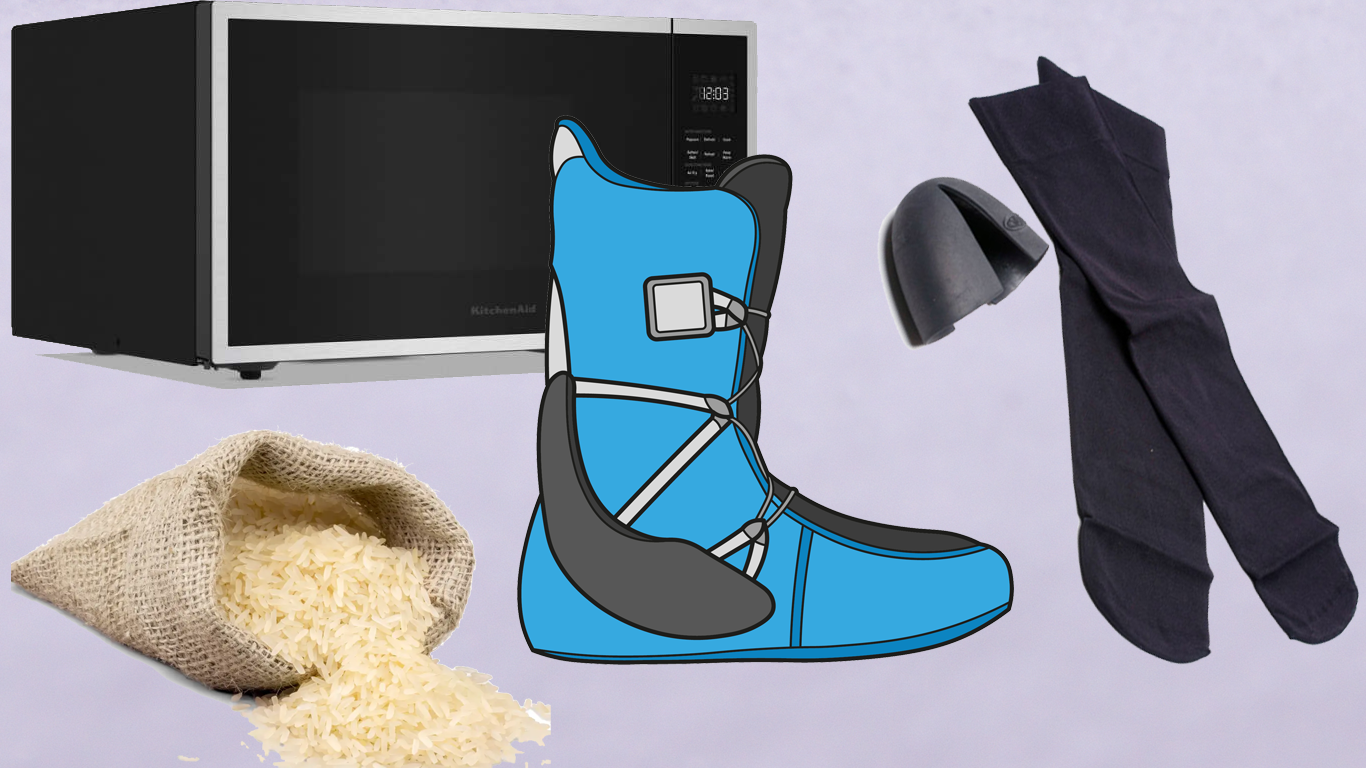
Most snowboard boots these days have heat moldable liners.
You can have them mold to your feet over time, while riding in them. But for a quicker break in/custom fit, you can heat mold them.
What Liners Can You Heat Mold?
Only very cheap snowboard boots these days come with liners that can be heat molded. For those you’ll need to just ride in them until they naturally mold to your feet. But chances are you’ll get boots that come with heat-moldable liners.
While not common to get liners that aren’t heat-moldable these days, it still pays to check to make sure.
Can I Heat-Mold my Snowboard Boots at home?
You most certainly can and it can be the most convenient and cheapest way to do it.
You may not want to do it yourself, and there could be various reasons for that, e.g;
- if you don’t trust yourself to do it;
- don’t want to take the chances that you don’t get it right; or
- simply don’t want to make the effort.
There could be many other reasons, all valid.
If you don’t want to do it yourself, most snowboard stores will do it for you. Some will do it for free, even if you didn’t buy your boots from them, some will charge if you didn’t buy the boots from them, and for others it depends on whether you go into the store during a busy time or a quiet time.
However, if you do want to do it yourself. Again there are many valid reasons why you might want to do it yourself, including but not limited to:
- You don’t have a snowboard store near where you live;
- Don’t want to make the effort to go to the snowboard store;
- Want to avoid the interactions, e.g. if you’re introverted
- Want to save costs and your local doesn’t do it as a free service
- Just like learning to do these things for yourself and want to be able to do it again in the future
- Might want to be able to do it for friends (or your crush!)
Whatever the reason, it’s not that hard to do for yourself at home and while there’s a little more risk involved, I’ve never once messed up a liner and I’ve heat molded hundreds of pairs of boots using this method.
How to Heat Mold Your Snowboard Boots at Home
There’s more than one way you can do it, but I use the rice method, because it’s pretty easy and feels pretty safe. Very little chance of anything going wrong during the process.
What Will You Need?
To heat mold your snowboard boots using the rice method, you will need:
- 2-4 lbs (900-1800g) of rice (uncooked). White rice is best. Haven’t tried instant but I’ve heard it won’t work. So, it’s best to go with regular white rice.
- 2 socks or stockings. Thinner is better as the heat transfers to the rice better and from the rice to your boot liner better. I’ve tried with thicker socks and it definitely doesn’t work as well.
- Microwave.
- Toe caps (optional).
The Process
Step 1: Create your Rice Socks

Pour the rice into the thin socks/stockings with about 2/3rds of the rice in one sock and 1/3rd of the rice in the other sock.
Tie the ends of the socks, so that no rice can escape. Trust me, it’s no fun cleaning up rice off the floor!
Step 2 : Heat your Rice Socks

Microwave your newly created rice socks for 4-7 minutes. This depends on the wattage of your microwave. Mine is 1350 watts and I microwave for 4 minutes, but if your microwave is less then it might need more time. Refer to the chart below for a rough guide. This isn’t going to be super precise and you might want to test for yourself – starting with less time to begin with.
The same rice socks can be used over and over, so don’t worry if you have to re-heat a few times before you get it right.
Be careful! When you take the socks out of the microwave, they will be super hot. This is necessary, in order to produce enough heat for the heat-molding process.
When removing the socks from the microwave it’s highly recommended to use heat resistant gloves.
| Microwave Watts | Minutes |
|---|---|
| 700-900 | 7 |
| 1000-1100 | 5 |
| 1200-1350 | 4 |
Step 3: Remove the Footbed from your Liner
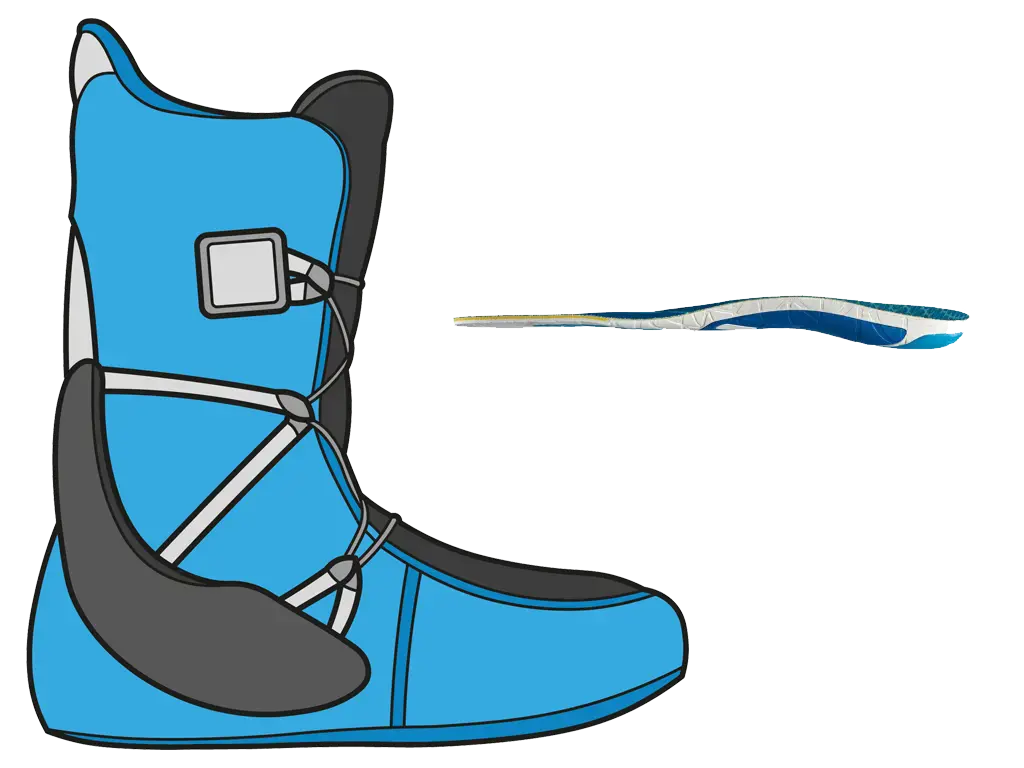
While the socks are cooking, remove the footbed from the liner of the boots.
I find you can often do this without taking the liner out of the shell. However, sometimes it might require you to remove the liner from the shell first, then take the footbed out and then put the liner back in the shell of the boots.
Step 4: Place the Hot Rice-Socks into Your Liner
Once the microwave has finished its job, place the hot rice socks into the boots.
A reminder, the socks will be very hot, so gloves are highly recommended for this part.
Place the sock with less rice (1/3rd of the total rice) into your boot first. If you use the fuller sock, it will be difficult to tease it right into the toes of the sock. This is another reason why thin socks are better too. With thicker socks it’s harder to get those rice-socks right down to the toes.
It takes a bit of finessing to get that first sock to move right to the end of the toes, so tap on the toe of the boot to help work it down there. Alternately tap the toe and heel of the boot if it’s proving to be difficult. The second sock is easy – and you can just drop it on in.
Step 5: Tighten Boots Lightly
You don’t want to over-compress the boots, so don’t do them up too tightly. Only tighten them enough that the heat will be distributed evenly around the liner and so as to help trap the heat.
Step 6: Get out Your Timer

You’ll want to keep the socks in the boots for 10 minutes.
So, if you are like me and are liable to get distracted by something else and forget all about the hot socks in your boots, you’ll want to set a timer with an alarm to remind you to take the rice out and put your feet in.
I like to set the timer for 8 minutes to give myself two minutes warning, but there’s a very good chance that your time management is better than mine! So however you want to do it.
Step 7: Where Thine Socks Once Were, Let Thy Feet Inhabit
OK, if that made no sense (sorry, it just sounded too boring to say “Take the Socks out and Put Your Feet In”), here’s the sane way to say it;
- Remove the Hot Socks from the Liner (they should be cool enough now that you don’t need gloves, but out of an abundance of caution, you can use the gloves again);
- Replace the footbed in the liner; and
- Put Your Foot in the Boot.
Note that if you can replace the footbed, without having to remove the liner from the boot, it helps to keep as much heat in as possible. But in some cases you’ll need to remove the liner from the shell first. If you do, then just try to do it as quickly as possible, so that you loose as little heat as possible.
Step 8: Tighten Your Boots
Ok, I admit, I was tempted to write Compress Your Foot’s Critical Binding Connection Companion Around Your Foot, but then that would just be getting carried away now, wouldn’t it.
Now, when you tighten your boots here, you’ll want to tighten your boots more than you did when heating the liner with the rice-sock in it but not as tight as you would when actually riding.
Step 9: Wear Your Boot for 10 minutes, Standing Up in a Snowboard Stance
This is just a case of keeping the boot on your foot for at least 10 minutes. This gives the liner enough chance to cool down around your foot, so it can mimic the shape of your foot. But there are a couple things to keep in mind here.
- You should be standing up; and
- Have your knees bent; and
- Wear your other boot on your other foot.
- I like to also stand in roughly what my stance width is when on the board.
The point here is to have the liners heat mold in as close a position as your natural snowboarding stance will be. You want them to be at their best for snowboarding – not for sitting, not for walking, not for standing still. If you stand up straight your lower calves aren’t in the same position as knees bent, neither is the arch of your foot. You’ll also not be in the right position if you’re sitting down.
It might be uncomfortable to stay in that knees bent position for 10+ minutes, but just look at it as snowboard training!
Step 10: Repeat for the other Boot
To save time, I like to stand close to the microwave (with the Rice Socks ready to go in there) when doing this. This way I can start re-heating the socks, for the second boot, when it’s getting close to the time to switch the boots.
Things to note:
- Best to do this one boot at a time
- If you’re going to use a toe cap to try to get more room for your toes, this is an optional step. Add them under the socks you wear when you put your feet in the boots. You can make a toe cap by cutting the end off an old pair of socks. You can also buy them as part of a heat molding kit from intuition (there might be others too, but that’s the one I know of).
- This isn’t going to make your boots suddenly fit, if they’re the wrong size. It will help to speed up the break in process, but it’s still super important you get the size right.
Thanks for reading, and I hope this has helped you to learn more about heat molding snowboard boots and how to do it at home, if that’s something you’re looking to do.


Leave a Reply