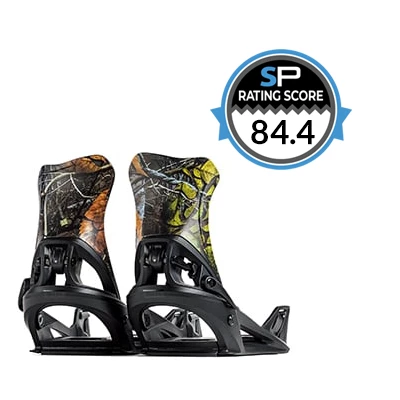
Overall, I found the DS Step On to be light-feeling, quick edge-to-edge, and pretty fun to turn in. They had a more responsive feel than I was expecting and were bordering on twitchy at times, but didn’t quite cross that line for me.
Step On isn’t my favorite speed-entry system, and I still personally prefer regular two-strap bindings, but there were definitely things I liked about them - especially how tidy and clean they were to carry around without straps hanging everywhere (but that is a low priority factor, IMO).
In this review I will take a look at the DS Step On as all-mountain snowboard bindings.
As per tradition here at SnowboardingProfiles.com I will give the DS Step On a score out of 100 (based on several factors) and see how they compare with other all-mountain bindings.
Overall Rating
Bindings: Flux DS Step On 2026
Price: $409 (USD recommended retail)
Style: All-Mountain
Flex Rating: Medium (5/10)
Flex Feel: Medium (6.5/10)
Rating Score: 84.4/100
Compared to other Men’s All-Mountain Bindings
Of the 30 current model men's all-mountain bindings that we tested:
❄️ The DS Step On ranked 16th out of 30
Overview of the DS Step On’s Specs
Check out the tables for the DS Step On’s specs and available sizes.
Specs
STYLE:
All-Mountain
PRICE:
$409 - BUYING OPTIONS
Ability Level:

flex:

weight:
FELT LIGHT
Mounts to:
2x4 | 4x4 | Channel
Sizing
SIZE | US BOOT SIZE | EURO BOOT SIZE | MONDO |
|---|---|---|---|
S | 6-8 | 38-41 | 24-26 |
M | 8.5-10.5 | 41.5-43.5 | 26.5-28.5 |
L | 11-13 | 44-46 | 29-31 |
Who are the DS Step On Most Suited To?
The Flux DS Step On are best suited to riders who want Step On bindings that feel quick edge-to-edge, supportive and a little more on the precise side versus soft, surfy or forgiving.
They should work well for intermediate and up riders who already like, or want to try, the Step On system and want something that feels more energetic and responsive than mellow. They were particularly good for carving and quick turns at slower speeds and had a fun, lively feeling when transitioning edge-to-edge.
I wouldn’t say they’re ideal for riders looking for maximum board feel, plush shock absorption or a super damp, locked-in ride. And if you really value the traditional feel of two-strap bindings — or enjoy the ritual and simplicity of strapping in — then these may not convince you to switch.
But if you’re already sold on Step On, or you like the idea of a clean, strapless setup and want something with a quicker, more responsive feel, then the DS Step On are worth looking at.
Best matched to boards in the 4.5/10 to 7.5/10 flex range, and particularly well suited to boards around that 5.5/10 to 6.5/10 flex range.
Test/review details for the DS Step On
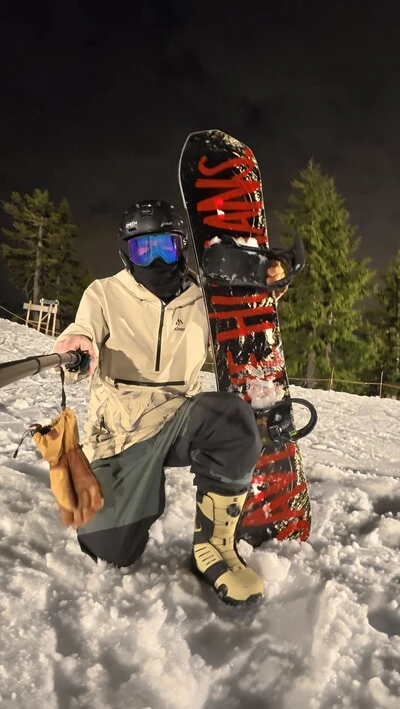
O.k. let’s take a more detailed look at what the DS Step On are capable of.
Demo Info
Binding: Flux DS Step On, M
Date: April 5, 2025
Flex
In Hand
In hand, the DS Step On felt quite stiff overall, particularly through the highback.
The highback had the stiffest twist flex of the bindings I had around it. It was just a touch stiffer than the Blaster Asym Fase, with the Flux XW a step softer again, then the SR, then the EM being noticeably softer.
For highback twist, I’d put the DS Step On around an 8.5/10.
For pullback flex, it was even stiffer overall. There was a bit of give on the medial side, but virtually none on the lateral side and none through the middle. Compared to the Blaster Asym Fase, the DS Step On had more medial-side flex, but was stiffer laterally and through the center.
Overall, for highback pullback flex, I’d put the DS Step On around a 9/10.
Of course, there were no ankle or toe straps to flex, because these are Step On bindings.
On-Snow
On snow, they didn’t feel quite as stiff as they did in hand, but they still had a medium-stiff overall feel. I’d say they felt around a 6.5/10 to 7/10 flex overall.
It was a little hard to say exactly how much of that was coming from the bindings and how much was coming from the boots, because with Step On that boot-binding relationship is a bigger part of the feel than it is with traditional two-strap bindings and the comparison isn’t as easy to make because I’m not testing with my control boots like I would for non Step On bindings.
Carving/Responsiveness
The DS Step On were really quick edge-to-edge at slower speeds.
They had a very lively, reactive feel, almost to the point of being twitchy. But they didn’t quite get to that point of being too twitchy, for me. They sat right on that border where they felt energetic and fun to turn, but not so nervous that they became unpleasant.
Carving was a little harder to judge because the conditions weren’t well suited for carving. Not a smooth surface in sight! And the snow was super lumpy and bumpy. But for what I could get in, they felt really good.
Board Feel / Butterability
Board feel was decent, but not a standout.
They didn’t feel dead or overly disconnected, but they also didn’t give me the same level of board feel I got from my control bindings (Burton Malavita) or a couple of the other bindings I tested around the same time.
That makes sense to me for this kind of binding. With Step On, there’s a different connection point than with traditional straps, and while that can create a clean, direct feel, it doesn’t necessarily create that natural, flexy, surfy feeling underfoot that I personally like in a good two-strap binding.
They weren’t bad for board feel, just not exceptional.
Shock Absorption
Shock absorption was OK, but again not amazing.
The footbed didn’t have mega amounts of cushioning, but it did feel like it had a little more than typical Flux bindings. I’d say it was around a 3.5/5 — maybe pushing toward 4/5 on snow, but I wouldn’t go higher than that.
Compared to the Fase bindings I rode around the same time, the DS Step On didn’t feel quite as good for shock absorption. But they were better than the Flux EM.
In choppy, lumpy snow, they did enough to keep things rideable, but they weren’t what I’d call plush or super damp. If shock absorption is a high priority for you, there are better options.
Pop / Ollie Power
Pop and ollie power felt pretty normal.
I didn’t feel like the bindings were giving me heaps of extra spring, but they also weren’t noticeably holding me back. There was enough there to load up and pop reasonably well, but nothing about them stood out as exceptional in that area.
Adjustability
Adjustability was fairly limited.
There was no heel cup adjustment – but no surprise being that they’re Step On. Also no highback lean adjustment, no highback rotation and no heel ramp adjustment (which most other Flux bindings have). Stance width adjustment was also pretty limited, similar to a Burton Re:Flex-style disc setup where you have to go a full set of holes width for any adjustments.
There was gas pedal extension, and they were compatible with the Channel, which helped. And of course, there’s the Step On-specific setup side of things, but in terms of traditional binding adjustability, they were not especially adjustable.
With Step On bindings, a lot of the fit and feel comes down to the boot compatibility and boot-binding interface, so you don’t have the same strap-position tuning you get with regular bindings.
Heel Cup Adjustment: No
Stance Width: Limited - as you can't run them horizontally.
Highback Lean Adjustment: No
Ankle Strap Position: n/a
Toe Strap Position: n/a
Ankle and toe strap length: n/a
Gas pedal/toe ramp extension: Yes
Highback Rotation: No
Compatible with: 2 x 4 | 4 x 4 | channel
Comfort
Comfort was mostly good, but with one caveat.
I did get some calf bite, though I felt like that was more likely coming from the boots than the bindings. But it was hard to say for sure. With Step On, the boots and bindings work together more directly, so isolating one from the other isn’t always easy.
There’s no ankle strap or toe strap, so there were no strap pressure points to worry about. That’s one of the obvious upsides of the Step On system.
But there was also no highback padding, and with the calf bite I experienced, I couldn’t say they were perfect for comfort but still good.
Ankle Support
Ankle support was a bit different to judge, because there’s no ankle strap.
With regular bindings, ankle support is largely about how well the ankle strap wraps and holds your boot. With these, that support came more from the way the boot was held back into the highback and locked into the binding.
It worked fine, but it didn’t give me the same reassuring ankle-wrapped feeling that I get from a good traditional strap binding.
Not bad, but not a standout either.
Entry/Exit
Entry and exit were the main thing I struggled with.
In theory, Step On should be fast, easy and smooth. And I’m assured by neutral, unbiased people that once you get used to it, it becomes exactly that.
But for me, I still found it awkward to get in and out.
I’d score entry/exit somewhere between 4.5 and 5 but that’s more based on the system’s potential and how fast it can be once dialed. But from my own experience on the day, it didn’t feel that automatic.
The upside is that I did really like the tidiness of not having straps, especially when transporting them. It’s a small thing, but it was genuinely nice.
That said, tidiness alone isn’t enough to make me want to change from regular two-strap bindings.
Score Breakdown and Final Verdict
Check out the breakdown of the score in the table below.
| Factor | Rating (/5) | Weighted |
|---|---|---|
| Carving | 4.5 | 18/20 |
| Slow Speed Response | 4.5 | 18/20 |
| Board Feel | 4 | 12/15 |
| Shock Absorption | 3 | 6/10 |
| Adjustability | 2.5 | 5/10 |
| Comfort | 4 | 8/10 |
| Ankle Support | 3.5 | 7/10 |
| Entry/Exit | 4.5 | 4.5/5 |
| TOTAL (after normalizing): | 84.4/100 |
The Flux DS Step On were light-feeling, quick-turning and fun to ride.
Their biggest strength was their slow-speed agility. They were really quick edge-to-edge and had a fun, lively feel that made them enjoyable for making quick turns. They were almost twitchy, but not quite, and that made them feel energetic without becoming too nervous.
They also felt really good for carving, though the conditions made that hard to fully judge. Shock absorption and board feel were both decent, but neither stood out as a major strength.
The question of whether you want the Step On system is of course pertinent here.
Personally, I still prefer regular two-strap bindings. I find them fast and easy to put on anyway, and I like the ritual of strapping in. So, I still don’t feel any strong pull to switch to Step On.
And if I had to choose a speed-entry system right now, I’d lean more toward Fase. That system felt closer to what I like about regular strap bindings, while still giving the speed-entry advantage.
But for riders who already like Step On, or who want a clean, strapless binding that feels quick, responsive and light, the Flux DS Step On are a solid option.
More Info, Current Prices and Where to Buy Online
If you want to learn more about the DS Step On, are ready to buy or want to research prices and availability, check out the links below.
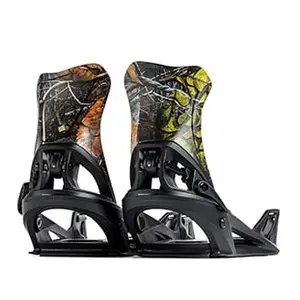
If you want to see how the DS Step On compares to other men’s all-mountain bindings or want to check out some other options in that category, check out the next link.

Leave a Reply