
The Bataleon Turbo was a board I was really curious to get on, because on paper it looked like it should be a pretty aggressive, powerful ride (something that is rare for Bataleon boards). And it was. But it wasn’t quite as beastly or punishing as I was expecting.
It was still a stiff, stable, aggressive-feeling board overall, but Bataleon’s 3BT base seemed to take a bit of the edge off that stiffness. Not enough to make it playful, easygoing or beginner-friendly, but enough that it was more manageable than I thought it might be. Based on my test notes, it handled the weird, sticky, lumpy snow better than the other boards I rode that day too.
In this review, I will take a look at the Turbo as an aggressive all-mountain snowboard.
As per tradition here at SnowboardingProfiles.com I will give the Turbo a score out of 100 (based on several factors) and see how it compares with other aggressive all-mtn snowboard snowboards.
Overall Rating
Board: Bataleon Turbo 2026
Price: $699
Style: Aggressive All-Mountain
Flex Rating: Stiff (9/10)
Flex Feel on Snow: Stiff (8/10)
Rating Score: 89.8/100
Compared to other Men’s Aggressive All-Mountain Boards
Of the 19 current model aggressive all-mtn snowboards that we tested:
❄️ The Turbo ranked 4th out of 19
Overview of the Turbo’S Specs
Check out the tables for the Turbo’s specs and available sizes.
STYLE:
aggressive all-mtn
PRICE:
$699 - BUYING OPTIONS
Ability Level:

flex:

feel:

DAMPNESS:

SMOOTH /SNAPPY:

Playful /aggressive:

Edge-hold:

camber profile:

Traditional Camber
TRAD CAMBer - But with 3BT base, so didn't feel like Trad Camber. Bataleon's "Medium Camber", according to their website, but I'd say high camber for sure (see camber height below)!
SHAPE:
setback stance:
Centered
BASE:
Sintered- Bataleon's "Ultra Glide S"
weight:
FELT Normal
Camber Height:
13mm
Sizing
LENGTH (cm) | Waist Width (mm) | Rec Rider Weight (lb) | Rec Rider Weight (kg) |
|---|---|---|---|
156 | 254 | 147-191 | 67-87 |
159 | 256 | 161-205 | 73-93 |
158W | 266 | 165-209 | 75-95 |
161W | 268 | 174-218 | 79-99 |
164W | 270 | 187-231 | 85-105 |
167W | 272 | 227-271 | 103-123 |
* weight recommendations are according to the manufacturer
Who is the Turbo Most Suited To?
The Turbo was best suited to stronger, more advanced riders who liked to ride with some speed and aggression, but who still wanted a board that could release its tail more easily than a traditional locked-in stiff camber board.
It wasn’t something I’d put a beginner on, and I wouldn’t really recommend it to most intermediates either. It needed a bit of input and it was happier when ridden with confidence.
It would work best for someone who wanted a powerful, stable board for carving, speed, jumps and variable snow, but who also liked the slightly more forgiving, less catchy feel that Bataleon’s 3BT brought to the table.
TEST/REVIEW DetailS FOR THE Turbo
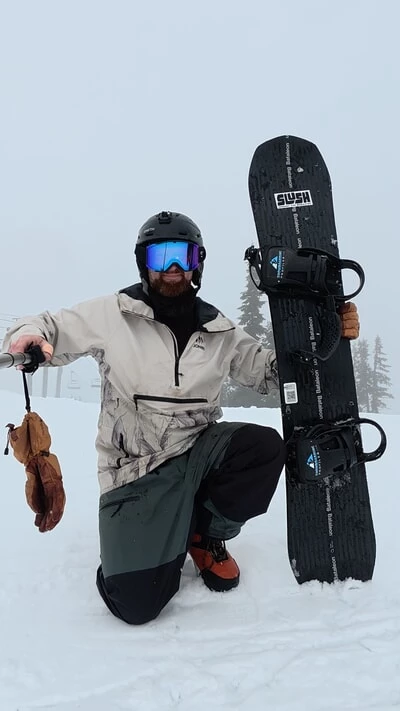
O.k. let’s take a more detailed look at what the Turbo is capable of.
Demo Info
Board: Bataleon Turbo 2026, 156cm (254mm waist width)
Date: April 7, 2025
Conditions
Unfortunately, the conditions weren’t ideal for properly testing a board like this.
It was colder, so I thought things might have firmed up nicely, but fresh snow seemed to prevent it from icing over properly. Instead, it was wet, sticky, lumpy snow. Not exactly the dream conditions for testing speed, edge hold or clean carving.
That said, the Turbo was the board that handled those conditions best on the day. It had the easiest time dealing with the sticky, messy snow compared to the other boards I rode.
Powder
There technically was some fresh snow around, but it was so sticky that it almost may as well not have counted as powder.
So, I couldn’t get a proper feel for how the Turbo floated in actual soft, light powder. Based on the specs, I’d expect it to be decent enough, but not something I’d buy primarily as a powder board. It had enough freeride flavor that it should be serviceable, but around average or just above the average board for powder.
Carving
This was one of the Turbo’s stronger areas, for sure. It wasn’t really great conditions for carving, with the snow being slow, soft, sticky and inconsistent, but even through that I could tell it had great carving power.
It felt like it wanted to be driven hard. The more confident and committed I was with it, the better it responded. It wasn’t one of those boards that instantly folded or got nervous when I pushed harder onto an edge.
I wouldn’t say I got to fully experience what it could do on a smooth, firmer groomer, but the signs were pretty obvious. It felt like a board that would be really fun when conditions were more supportive and you could properly lay into it.
Turning
Ease of Turning/Slashing
For how stiff the Turbo was, it was easier to turn and slash than I expected.
That was likely at least partly because of the 3BT base. Even though the board had some proper stiffness and power to it, the base shaping seemed to make it easier to release the edge and get the tail out when I wanted to.
It still wasn’t lightning quick or effortless, but it didn’t feel like a beast that punished every lazy turn either.
Maneuverability at Slow Speeds
At slower speeds, it was decent. Not amazing, but better than I thought it would be.
It took more effort than a softer, more playful board, and it didn’t have that easy, nimble feel that makes tight slow-speed turns feel automatic. But for a board this stiff and stable, it was manageable.
I wouldn’t call it a tree specialist, but it wasn’t hopeless in tighter spots either.
Catchiness
It wasn’t catch-free, but it also didn’t feel super catchy.
There was some catch threat there, particularly in transitions and with the conditions making things more awkward. But the 3BT seemed to counter some of the catchy feeling that might otherwise come from a stiffer torsional flex, like the Turbo has.
So, overall, I’d call it semi-locked-in rather than fully locked-in. You could lock it into a carve, but you could also release and slash the tail more easily than you might expect from a board this aggressive.
Speed
The Turbo felt really stable at speed. It was hard to properly judge top-end speed in the conditions, because the snow was slow and sticky, but the board itself felt calm and composed. I didn’t get that nervous, twitchy feeling underfoot.
Uneven Terrain
Crud/Chunder
This was another area where the Turbo impressed me. In the soft, lumpy, sticky mess, it did really well. It handled the conditions better than my control board and the Rome Freaker (that I also rode that day). The breaking effect of the sticky snow wasn’t as bad on the Turbo, and it felt like it had enough stability and dampness to stay composed.
In harder chop, ruts and chunder, I couldn’t say for sure from that day’s conditions, but based on the feel, I’d expect it to do well. It had that stable, damp, powerful feel that usually helps in chopped-up snow.
Trees/Bumps
In trees and moguls, it was better than expected, but not ideal.
It had enough maneuverability to get through tighter terrain, and the 3BT helped it feel more forgiving than a traditional stiff aggressive board might have. But it was still a stiffer board that preferred to be ridden with some power and with more speed under it.
So, it was fine in bumps and trees, but not something I’d pick if tight technical terrain was the main focus.
Jumps
The Turbo was solid for jumps, but not effortless.
Pop
The total pop was good, but it took more effort than average to access it. It wasn’t as hard to pop as I thought it might be, but I still had to put a bit more into it than I would on an easy going board.
But total pop was decent once I loaded it properly.
Approach
Approaches felt good. The board was stable and composed, which gave it a nice platform coming into jumps. Adjustments and speed checks not as easy, but not as bad as you might expect from a board this stiff.
Landings
Landings also felt good. The Turbo had enough stiffness and stability to feel dependable when coming back down. It wasn’t ultra-forgiving, but it gave me confidence.
Side Hits
Side hits were fine. Not amazing, because it wasn’t super easy to access the pop and wasn’t the quickest turning board around, but it was still fun enough when I put the effort in.
Switch
Switch was o.k.
Transitions were decent, but there was a little catch threat there. Some of that was probably the conditions, but I still wouldn’t call it effortless switch.
It wasn’t terrible by any means, and the 3BT again helped smooth things out a little. But it wasn’t a board I’d choose if switch riding was a big part of my day.
Spins
For spins, the Turbo was decent enough. It took a bit of effort to get around, and the sticky conditions made things trickier, especially with the tail getting stuck on takeoff. But there was no spin-continuation after landing, and it was actually pretty good for finishing under-rotations on the snow.
Again, I think the 3BT helped here. It seemed to reduce some of the catchy effects that might otherwise come from that stiffer torsional flex.
So not a natural spinner, but better than I expected for the type of board it was.
Butters
Butters and presses were possible, but they took some effort.
I could definitely feel the extra stiffness in the tip and tail compared to my control board and to the average board, though not by as much as I thought I would. I could still get a bit of a press going, but it wasn’t easy or playful.
If you like boards that fold into presses with minimal effort, this wasn’t that. But for a stiffer aggressive board, it was more pressable than expected.
Board Feel/Personality
The Turbo had a stable personality overall. It was damp rather than chattery, though the conditions made that a little harder to judge properly. I’d call it a little more smooth than snappy, but not dead. It still had some energy there when loaded up.
On the playful-to-aggressive scale, it sat around 7 to 8 out of 10. It wasn’t as aggressive as I expected it to be, but it was still definitely happier when I rode it aggressively.
One of the interesting things about it was that it didn’t feel fully locked-in in the way some aggressive camber boards do. I’m not sure it’s even possible to get that fully locked-in feel with 3BT. But that wasn’t necessarily a bad thing. You could still lock into an edge when you wanted, while also being able to release the tail and slash more easily than expected.
Score Breakdown and Final Verdict
Check out the breakdown of the score in the table below.
| FACTOR | Rating (/5) | Weighted |
|---|---|---|
| Speed | 4.5 | 18/20 |
| Carving | 4.5 | 18/20 |
| Turns | 3.5 | 3.5/5 |
| Jumps | 3.5 | 10.5/15 |
| Powder | 3 | 6/10 |
| Crud | 4.5 | 9/10 |
| Trees | 3.5 | 3.5/5 |
| Switch | 3.5 | 7/10 |
| Spins | 3.5 | 3.5/5 |
| TOTAL (after normalizing): | 89.8/100 |
The Bataleon Turbo was a stiff, stable, aggressive board that was more manageable for slower, more casual riding than I expected.
It had good carving potential, felt strong and composed at speed, handled messy uneven snow really well and was solid for jumps. It wasn’t especially playful, easy to butter, quick at slow speeds or ideal for switch/spins, but it was better in those areas than I thought it might be for how stiff it was.
The biggest takeaway for me was that the 3BT seemed to mellow out the ride just enough. It didn’t turn the Turbo into an easygoing board, but it made it less punishing and more slashable than a traditional stiff, aggressive board might have been.
For advanced to expert riders looking for a powerful board that could carve, charge, jump and deal with variable snow - but who still wanted that Bataleon 3BT forgiveness and release - the Turbo makes a lot of sense.More Info, Current Prices and Where to Buy Online
To learn more about the Turbo, or if you're ready to buy, or if you just want to research prices and availability, check out the links below.
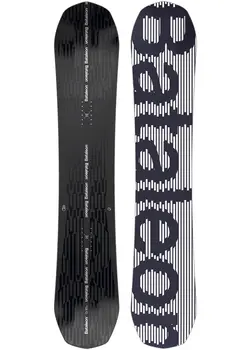
To check out some other aggressive all-mtn snowboard options, or to see how the Turbo compares to others, check out our top rated aggressive all-mtn snowboards by clicking the button below.

Leave a Reply